
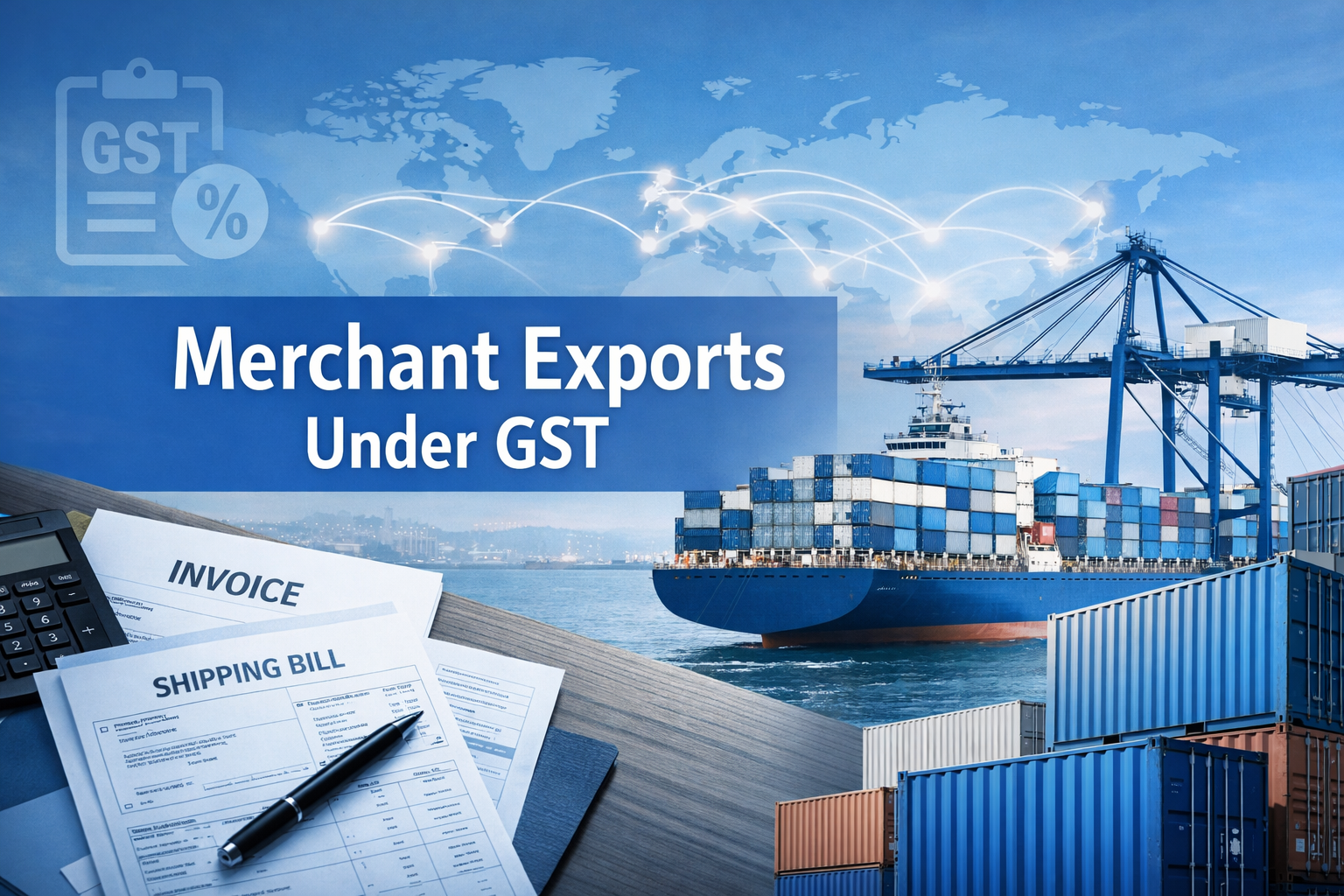
Merchant Exports Under GST: Meaning and Process Explained
Merchant exports play a crucial role in India’s export ecosystem, especially for traders and export companies that do not manufacture goods themselves. Under the Goods and Services Tax (GST) framework, merchant exports have been provided specific benefits to promote exports and reduce tax burden.
This blog explains the meaning of merchant exports, the step‑by‑step process of merchant exports under GST, applicable rules, documentation, and key advantages for export businesses.
What Are Merchant Exports?
Merchant exports refer to the export of goods by a trader who purchases goods from a domestic supplier and exports them outside India without undertaking any manufacturing activity.
In simple terms:
- Goods are purchased from an Indian supplier
- The buyer exports those goods to an overseas customer
- The exporter does not manufacture the goods
Merchant exporters act as a bridge between Indian manufacturers and global buyers.
Who Is a Merchant Exporter?
A merchant exporter is a business entity that:
- Is registered under GST
- Is involved in exporting goods
- Does not manufacture the exported goods
Merchant exporters commonly deal in:
- Agricultural commodities
- Food products
- FMCG goods
- Textiles and garments
- Engineering and industrial products
Export‑focused companies like Mahalaxmi Trade follow merchant export models to supply Indian products to international markets efficiently.
Merchant Exports Under GST – Overview
Under GST law, exports are treated as zero‑rated supplies, meaning:
- No GST is ultimately charged on exported goods
- Input Tax Credit (ITC) can be claimed
- Export competitiveness is improved
To support merchant exporters, the government allows procurement of goods at a concessional GST rate, reducing working capital blockage.
Concessional GST Rate for Merchant Exports
Merchant exporters are permitted to purchase goods at a concessional GST rate of 0.1% (for inter‑state supply) instead of the normal applicable GST rate.
This benefit:
- Reduces upfront tax payment
- Improves cash flow
- Makes exports more competitive
Conditions for Merchant Exports Under GST
To avail the concessional GST rate, the following conditions must be satisfied:
Export Within 90 Days
Goods must be exported within 90 days from the date of the supplier’s tax invoice.
GST Registration
Both the supplier and merchant exporter must be GST registered.
Export Through Customs
Exports must be carried out under a valid shipping bill.
Mandatory Documentation
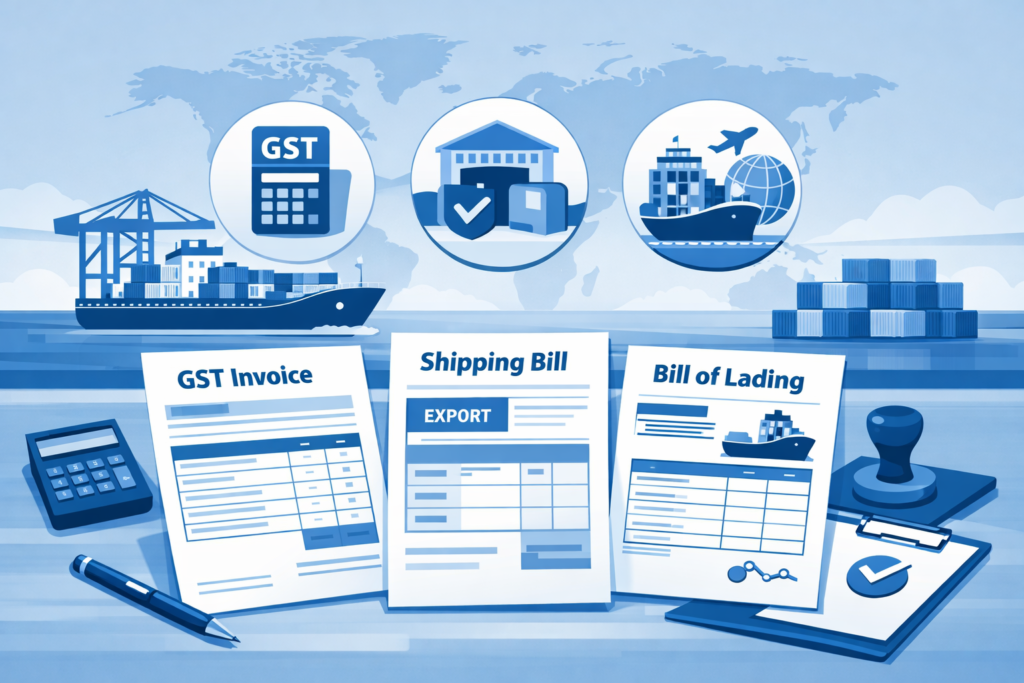
Required documents include:
- Tax invoice
- Shipping bill
- Export General Manifest (EGM)
- Bill of lading or airway bill
Supplier Details in Shipping Bill
The supplier’s GSTIN must be mentioned in the shipping bill along with exporter details.
Step‑by‑Step Process of Merchant Exports Under GST
Step 1: Purchase of Goods
The merchant exporter purchases goods from a registered supplier at a 0.1% GST rate.
Step 2: Issue of Tax Invoice
The supplier issues an invoice mentioning:
- Concessional GST rate
- Export intent
- Merchant exporter’s GSTIN
Step 3: Export of Goods
The goods are exported outside India within 90 days.
Step 4: Filing of Shipping Bill
A shipping bill is filed with customs containing:
- Exporter details
- Supplier GSTIN
- Invoice references
Step 5: GST Return Filing
- Supplier reports supply in GSTR‑1
- Merchant exporter reports exports in GSTR‑1
- ITC refund may be claimed if applicable
Refund of GST in Merchant Exports
Since exports are zero‑rated:
- Merchant exporters can claim a refund of accumulated ITC
- Refund is processed after successful export
- GST and customs data must match accurately
Advantages of Merchant Exports Under GST
Merchant export benefits include:
- Lower GST outflow
- Reduced working capital blockage
- Easier access to global markets
- Promotion of export trading companies
- Improved price competitiveness
This model is especially suitable for export houses and trading firms operating globally.
Common Mistakes to Avoid in Merchant Exports
Merchant exporters should avoid:
- Missing the 90‑day export deadline
- Incorrect GSTIN details in shipping bills
- Mismatch between GST returns and customs data
- Incomplete documentation
Such errors may lead to denial of concessional benefits or GST recovery demands.
Difference Between Merchant Exporter and Manufacturer Exporter
| Basis | Merchant Exporter | Manufacturer Exporter |
|---|---|---|
| Manufacturing | No | Yes |
| Goods Source | Purchased from supplier | Self‑manufactured |
| GST on Procurement | Concessional (0.1%) | Normal rate |
| Export Responsibility | Merchant exporter | Manufacturer |
Compliance Requirements for Merchant Exporters
Merchant exporters must:
- Maintain proper records
- File GST returns on time
- Reconcile GST and customs data
- Follow prescribed export timelines
Proper compliance ensures smooth refunds and avoids penalties.
Role of Export Trading Companies
Export trading companies help streamline the merchant export process by managing sourcing, documentation, logistics, and compliance. Businesses working with experienced exporters like Mahalaxmi Trade benefit from structured processes and regulatory clarity.
To learn more about export activities and services, you can explore: Mahalaxmi Trade – Indian Export Company
Importance of Reliable Trade Information
Accurate information is essential for GST and export compliance. For official GST rules and notifications, exporters should always refer to government‑recognized platforms such as the GST portal or CBIC notifications for the latest updates.
Conclusion
Merchant exports are a powerful model for Indian traders looking to expand into international markets without manufacturing goods themselves. Under GST, concessional tax rates, zero‑rated supplies, and refund mechanisms make merchant exports more efficient and business‑friendly.
Understanding the meaning and process of merchant exports under GST helps exporters remain compliant, reduce tax costs, and grow globally. With the right documentation, timelines, and professional support, merchant exporters can successfully operate within India’s GST framework and compete in global trade.


About author



Add comment