
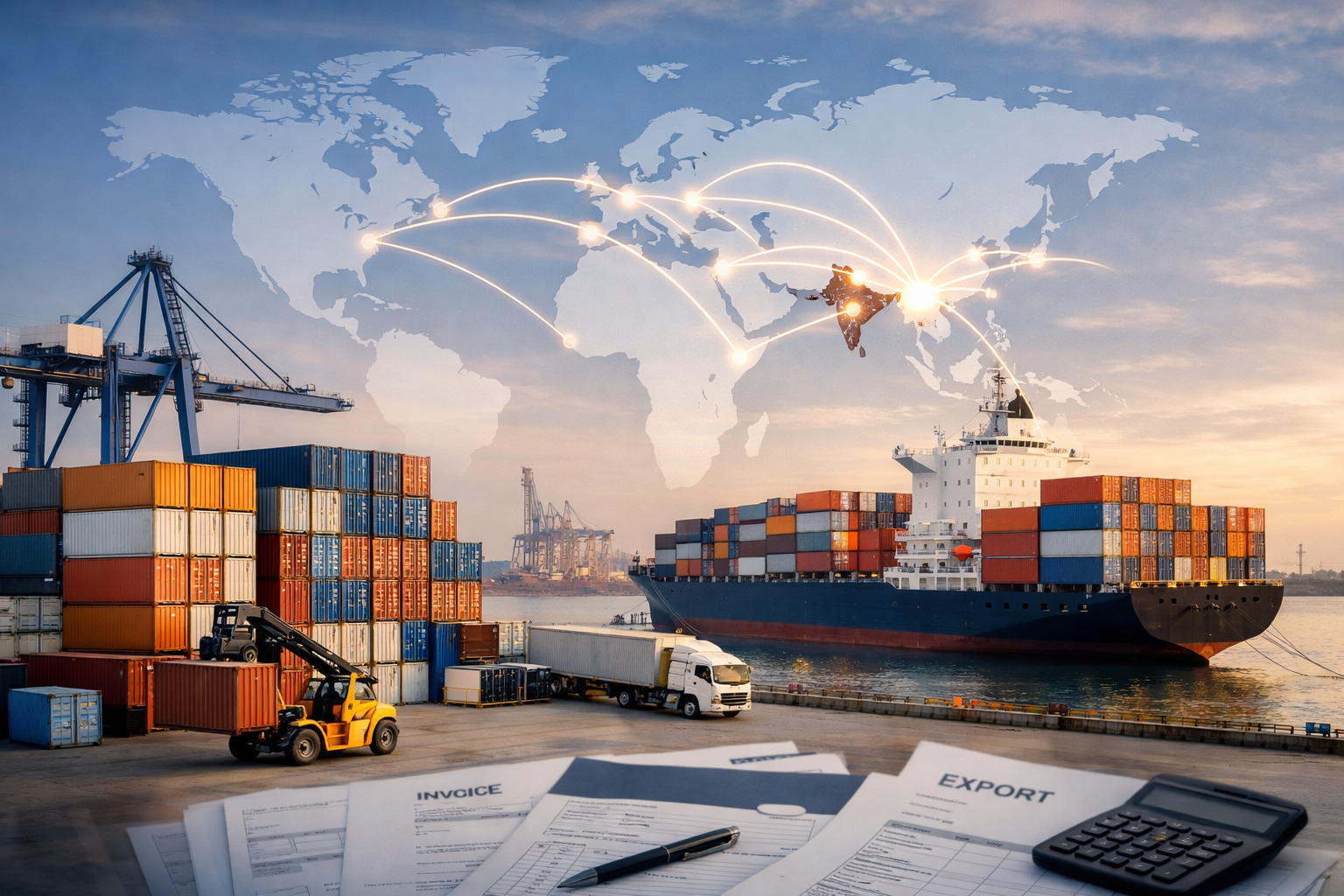
How to Start an Export Business in India
How to start an export business in India is a common question among entrepreneurs planning to enter international markets. With proper registration, documentation, and compliance, starting an export business in India can be a profitable and scalable opportunity.
Step‑by‑Step Process to Start an Export Business in India
Step 1: Choose Products for Export Business in India
Selecting the right product is the foundation of a successful export business in India. Choose products with strong international demand, good profit margins, and easy availability.
Step 2: Market Research for Export Business in India
Before starting an export business in India, conduct market research to understand:
- Target countries
- Import regulations
- Buyer demand
- Pricing strategy
Proper research reduces risks in international trade.
Step 3: Select Business Structure for Export Business in India
Choose a suitable structure such as:
- Proprietorship
- Partnership
- LLP
- Private Limited Company
The structure affects taxation, compliance, and growth of your export business in India.
Step 4: Obtain Import Export Code (IEC) to Start Export Business
To start an export business in India, obtaining an Import Export Code (IEC) is mandatory. IEC is issued by the Directorate General of Foreign Trade (DGFT) and remains valid for a lifetime.
Step 5: GST Registration for Export Business in India
GST registration is required for exporters, as exports are treated as zero‑rated supply under Indian law. GST helps exporters claim refunds and remain compliant.
Step 6: Open Bank Account for Export Business Transactions
A current account in the business name is required to receive international payments and manage export transactions smoothly.
Step 7: Register with Export Promotion Councils in India
Export Promotion Councils help exporters with:
- Market access
- Trade data
- Export incentives
- Buyer connections
This step strengthens credibility in the export business ecosystem.
Step 8: Find International Buyers for Export Business
Buyers can be found through:
- B2B portals
- Trade fairs
- Digital marketing
- Business websites
Always verify buyers before finalizing export deals.
Learn more about professional import export consultancy services to find verified buyers.
Step 9: Export Documentation Required for Export Business in India
Proper export documentation ensures smooth customs clearance. Key documents include:
- Commercial invoice
- Packing list
- Shipping bill
- Bill of lading / airway bill
Incorrect documentation can delay shipments.
Step 10: Logistics & Shipping for Export Business in India
Export logistics includes selecting sea freight, air freight, or courier services based on cost and delivery timelines. Choosing reliable logistics partners is critical.
Step 11: Export Payment Methods in Export Business
Common export payment methods include:
- Advance payment
- Letter of Credit (LC)
- Documents against payment
- Open account
Secure payment terms reduce financial risk.
Benefits of Starting an Export Business in India
Starting an export business in India offers:
- Access to global markets
- Government incentives
- Foreign currency earnings
- Long‑term growth opportunities
Challenges in Export Business and How to Overcome Them
Exporters may face compliance issues, payment risks, and logistics delays. Professional guidance and planning help overcome these challenges.
Contact our export experts for complete guidance on starting an export business in India.
Conclusion
Understanding how to start an export business in India helps entrepreneurs enter global markets with confidence. With proper documentation, compliance, and market research, an export business can become a sustainable and profitable venture.


About author




Add comment